
Barrier arm gate service for HOA communities in Florida is one of the most frequently deferred maintenance items on a property manager’s list, and one of the most expensive to ignore. A barrier arm at a primary community entry can cycle 300 to 500 times per day in a busy Bradenton or Sarasota HOA, accumulating wear on the operator, motor, and arm mechanism at a rate that most standard service schedules do not account for. Understanding cycle capacity, wear indicators, and what a realistic maintenance schedule looks like is the difference between a barrier arm system that lasts and one that creates recurring repair calls.
What HOA Boards and Property Managers Need to Know About Barrier Arm Capacity
What a Cycle Rating Actually Means
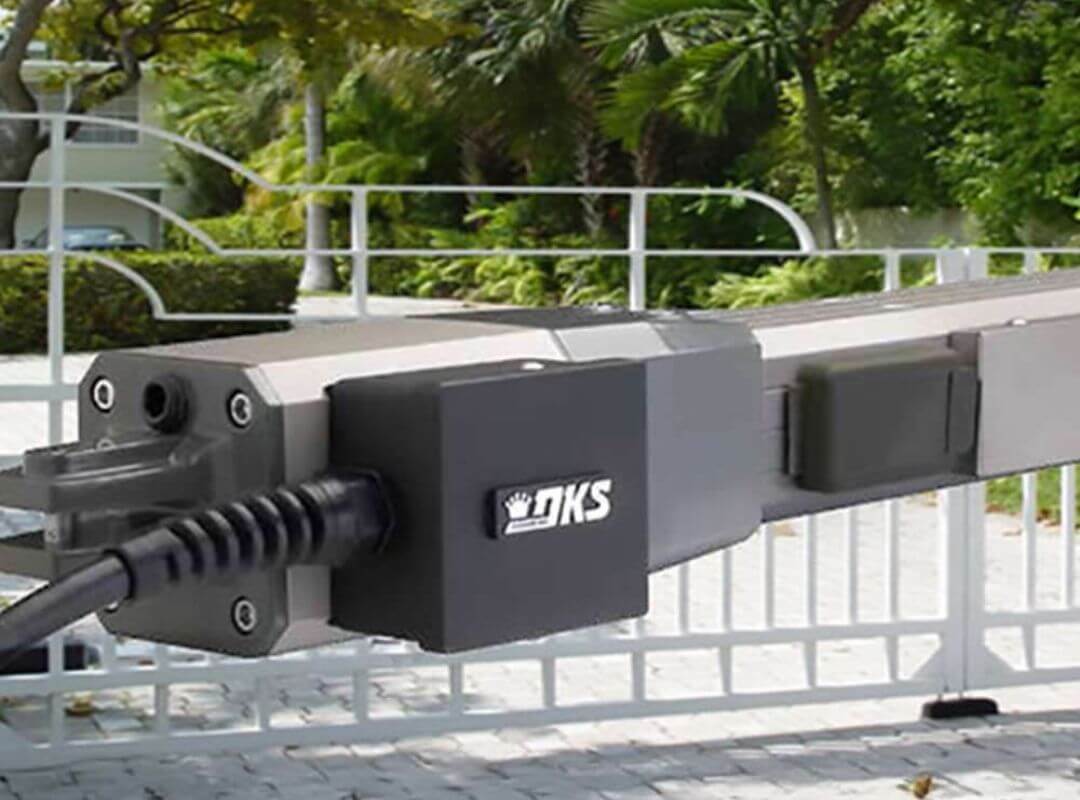
Every barrier arm operator is rated for a specific number of cycles per day; the total open and close sequences the unit is designed to handle reliably under normal operating conditions. Residential-grade operators are typically rated for 25 to 50 cycles per day. Commercial-grade operators designed for HOA and high-traffic applications are rated significantly higher, with heavy-duty units engineered for continuous-duty operation at 300 or more cycles per day.
Installing a residential-grade barrier arm at an HOA community entry is the single most common setup mistake we encounter on service calls in Bradenton and Sarasota County. A unit rated for 50 cycles running at 300 cycles per day will show accelerated wear on every mechanical component, the motor, the gearbox, the limit switches, and the arm release mechanism, within months of installation. By the time the failure presents visibly, the damage is already deep in the drive system.
Florida’s Climate and What It Does to Barrier Arm Systems
Barrier arm gate service in HOA communities across Florida carries additional demands beyond cycle volume. Sarasota and Bradenton’s combination of salt air, heat, UV exposure, and storm season creates a degradation environment that accelerates wear on every external component of a barrier arm system:
- Salt air corrosion attacks electrical connections, limit switch contacts, and the arm mounting hardware. Connections that pass a visual inspection can still be degraded enough to cause intermittent failures
- Heat and UV exposure degrade the plastic housing, rubber seals, and wiring insulation on operators mounted in direct sun, a common installation condition in Florida’s flat, open community entrances
- Storm season impact introduces debris strikes, power surges, and flooding around control panels and wiring conduits that a single annual inspection will not catch between events
A barrier arm system in Bradenton operating under these conditions needs a service interval calibrated to Florida’s environment, not a national maintenance schedule written for a moderate climate.
The Most Common Barrier Arm Failure Points in HOA Applications
After hundreds of barrier arm service calls across Sarasota County and Manatee County, the failure points we encounter most consistently are:
- Limit switch wear – the switches that tell the operator the arm has reached full open or full close position degrade from high-cycle use, causing the arm to over-travel, stop short, or reverse unexpectedly
- Gearbox and motor wear – high-cycle operators that are not lubricated on schedule develop wear patterns in the drive gears that produce audible grinding before they fail completely
- Arm release mechanism failure – modern barrier arms are designed to release on impact to prevent structural damage from vehicle strikes; the release spring and locking mechanism require periodic inspection to ensure they function as intended
- Control board corrosion – moisture intrusion from Florida’s humidity and rainfall degrades solder joints and relay contacts on the control board inside the operator housing, producing intermittent and hard-to-diagnose failures
- Access control system troubleshooting issues – credential readers, loop detectors, and safety sensors mounted at barrier arm entries are exposed to the same environmental stress as the operator and fail independently of it, often presenting as access control system troubleshooting calls rather than hardware failures
What a Realistic Maintenance Schedule Looks Like for HOA Barrier Arms
For a barrier arm at a primary HOA community entry in Bradenton or Sarasota cycling 200 or more times per day, the following service intervals reflect real-world operating conditions, not manufacturer minimums designed for lower-use applications:
- Quarterly: Lubrication of gearbox and pivot points, limit switch inspection and adjustment, arm release mechanism test, safety sensor and loop detector verification, visual inspection of control board housing for moisture intrusion
- Semi-annually: Full operator diagnostic, wiring and connection inspection, control board cleaning and corrosion treatment, access credential system verification, arm balance, and travel adjustment
- After any storm event: Physical inspection for debris impact, power surge assessment on the control board, check for water intrusion in the operator housing, and conduit
Communities that defer maintenance to annual or as-needed intervals consistently see higher total repair costs and shorter equipment lifespans than those on a structured quarterly schedule. The math is straightforward: a barrier arm cycling 300 times per day accumulates the same wear in one year that a residential gate sees in a decade. The service schedule needs to reflect that reality.
When to Replace vs. Repair: How to Read the Signals
Not every barrier arm failure warrants full replacement. Limit switch wear, lubrication deficits, and minor corrosion on electrical connections are all serviceable conditions that a qualified technician can address on-site. The threshold for replacement typically arrives when any of the following are present:
- The operator is a residential-grade unit running in a commercial-cycle HOA application
- The gearbox has developed audible wear that lubrication does not resolve
- The control board has sustained corrosion or surge damage that affects reliability despite cleaning and treatment
- The community is experiencing recurring failures on the same component within a compressed timeframe despite repairs
A legitimate resolution to a barrier arm failure addresses the root cause, not just the presenting symptom. For HOA communities in Bradenton experiencing recurring issues, our professional gate repair services include a full diagnostic before any repair recommendation is made — because nothing is worse than repair work that does not fully address the problem.
For HOA-specific programs, including maintenance plans, access control support, and community entry service across Sarasota County and Manatee County, visit our HOA gate services page. For a full overview of the gate and access solutions we offer throughout Southwest Florida, visit our services overview. If your community is in the Bradenton area and looking for local service support, our Bradenton gate service page covers what we offer in your area.
Frequently Asked Questions
How often should an HOA barrier arm be serviced in Florida?
For a primary HOA community entry cycling 200 or more times per day in Florida’s climate, quarterly professional service is the appropriate interval. Salt air, heat, and storm season accelerate wear on barrier arm components significantly faster than in other climates. Communities that follow annual or as-needed service schedules consistently see higher emergency repair rates and shorter equipment lifespans than those on a quarterly maintenance program calibrated to Florida’s operating conditions.
What is the most common barrier arm gate repair issue for HOA communities?
Limit switch wear is the most frequent barrier arm failure we diagnose at HOA community entries. Limit switches tell the operator when the arm has reached its full open or closed position — when they degrade from high-cycle use, the arm over-travels, stops short, or reverses without command. Gearbox wear from inadequate lubrication and control board corrosion from moisture intrusion are the next most common issues, both of which develop gradually and are reliably caught during scheduled maintenance visits before they cause a full system failure.
Can access control system troubleshooting issues be related to barrier arm problems?
Yes. The credential readers, loop detectors, and safety sensors mounted at barrier arm entries are exposed to the same environmental stress as the operator itself and fail independently of it. What presents as an access control system troubleshooting issue, a fob that does not trigger the arm, a loop detector that does not detect vehicles, or a safety sensor that causes erratic behavior, is often a hardware failure in the access control components rather than a software or credential configuration problem. A qualified technician will assess the full entry system, not just the operator, when diagnosing intermittent failures.
Do you provide barrier arm gate service for HOA communities in Bradenton?
Yes. Bradenton and Manatee County are among our primary service areas. We provide barrier arm inspection, repair, and preventive maintenance for HOA communities throughout the region, with prompt response times for both scheduled service and emergency calls. Free consultations are available for communities evaluating a new installation, an upgrade to a commercial-grade operator, or a transition to a structured maintenance program. Call (941) 349-4455 to schedule, or reach our 24-hour emergency line at (229) 251-3066 for urgent needs.
Schedule a Barrier Arm Inspection
24/7 Emergency Gate Service: 229.251.3066 | Main Office: (941) 349-4455