
Equestrian properties have unique access needs that go far beyond a standard residential driveway. Between horse trailers, service vehicles, staff traffic, and frequent deliveries, the entrance to a barn or riding facility must be secure, reliable, and easy to operate. That’s why automated gates for equestrian facilities have become an essential upgrade for owners who want stronger security, smoother daily operations, and a polished first impression.
From private barns to training centers and full-scale equestrian communities, the right gate system protects animals, equipment, and property, while supporting safe, efficient movement in and out of the facility. Below, we’ll cover the most important equestrian gate design considerations and the durability features that matter most for long-term performance.
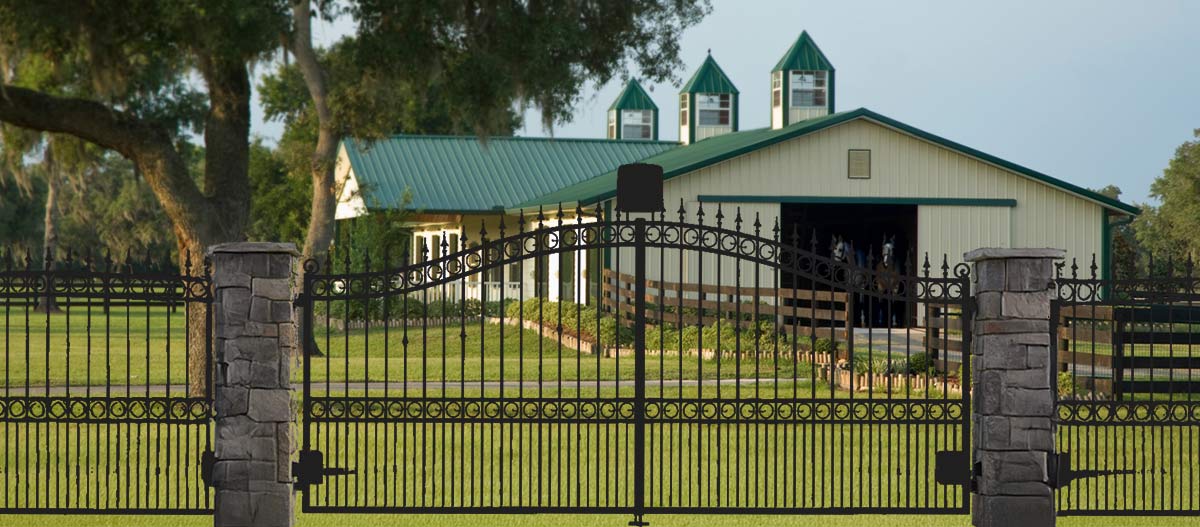
Why Equestrian Facilities Need Specialized Automated Gates
Unlike typical homes, equestrian properties often involve:
- Large vehicles and horse trailers
- Multiple access points (main gate, staff entrance, pasture gates)
- Early morning and late-night entry needs
- Valuable equipment, tack, and livestock on-site
- Remote locations with limited visibility
These factors make access control a priority. A well-designed automated gate helps prevent unauthorized entry while improving safety for both horses and people.
Managing these complex requirements requires specialized expertise; at Sarasota Gates and Access, we provide professional gate design and installation tailored to the unique layout of your ranch or farm.
Key Equestrian Gate Design Considerations
1. Extra-Wide Gate Openings for Trailers and Equipment
One of the most important equestrian gate design details is width. Horse trailers require significantly more clearance than standard vehicles, especially when turning.
Recommended approach:
- Wider entry openings (often 14–20 feet, depending on traffic type)
- Sufficient turning radius inside the property.
- Smooth, stable ground surface near the gate
A gate that’s too narrow can create daily frustration and increase the risk of accidents. Because every property has different spatial requirements, we specialize in high-quality, custom automated gates for equestrian facilities and livestock that prioritize both clearance and long-term durability
2. Safe Clearance and Smooth Operation
Horses can spook easily, especially around loud motors, sudden movement, or squealing hinges. For this reason, automated gates for equestrian facilities should be designed for:
- Quiet operation
- Smooth opening/closing without jerking
- No sharp edges or exposed hardware
- Proper spacing to prevent legs or hooves from getting caught
If horses will be near the gate area (or if pastures are adjacent), safety-focused engineering becomes even more critical. nsuring that your gate operates silently and safely is our priority, which is why our customized gate designs use advanced technology and premium hardware to minimize noise and prevent spooking your animals
3. Reliable Access Control for Staff, Trainers, and Deliveries
Equestrian facilities often have more daily traffic than people realize. The best systems allow multiple user types to enter securely, including:
- Owners and family members
- Trainers and staff
- Veterinarians and farriers
- Feed deliveries
- Boarding clients
Modern gate systems can include:
- Keypads
- Key fobs
- Mobile access apps
- Vehicle sensors
- Remote access for owners/managers
This improves control while preventing gate codes from being shared widely.
4. Design That Matches the Property
The gate is often the first thing visitors see. For barns and equestrian estates, appearance matters. A quality gate can enhance the facility’s brand and professionalism, especially for training centers or boarding barns.
Popular equestrian styles include:
- Ranch-style horizontal bar gates
- Decorative wrought iron gates with horse motifs
- Wood-look finishes for traditional farm aesthetics
- Custom signage integration (barn name, ranch logo)
A custom gate system adds curb appeal while still prioritizing durability.
Durability Factors That Matter Most for Equestrian Properties
Equestrian facilities face tougher wear than typical residential settings. Dust, mud, and manure exposure, along with constant traffic, all contribute to accelerated deterioration when materials are not selected carefully.
1. Corrosion-Resistant Materials
Outdoor gate systems should be built from materials designed to withstand moisture and humidity, including:
- Powder-coated steel
- Aluminum gates for rust resistance
- Galvanized finishes for long-term durability
If the property is near the coast or in a high-humidity region, corrosion resistance is even more important.
2. Heavy-Duty Gate Operators Built for High Traffic
Not all motors are created equal. Many equestrian facilities have higher entry frequency than standard homes, so the operator should be rated for:
- High cycles per day
- Commercial-grade performance
- Heavy gate weight capacity
- Long service life
A heavy-duty operator reduces downtime and prevents costly repairs.
3. Weather and Wind Load Protection
Wide, decorative gates can catch the wind like a sail. If your facility is in an open area, wind load must be considered during design.
Key durability upgrades include:
- Reinforced gate framing
- Proper post installation and concrete footings
- Wind-rated operator selection
- Smart sensor control to prevent strain
This is one of the most overlooked issues in automated gates for equestrian facilities.
4. Dust, Debris, and Ground Conditions
Barn environments are dusty by nature. Dust buildup can impact moving parts, rollers, and sensors. The gate system should include:
- Sealed components when possible
- Regular lubrication points
- Track designs that reduce clogging (for sliding gates)
- Proper drainage to prevent standing water and mud
Stable ground conditions around the gate reduce misalignment and long-term wear.
Best Gate Types for Equestrian Facilities
Sliding Gates
Sliding gates are ideal when space is limited or when a gate must remain stable in windy conditions. They’re also well-suited for wider entrances.
Swing Gates
Swing gates offer a classic farm look and work well when there’s enough room for the gate to open fully. They can be single-swing or dual-swing, depending on width.
Choosing between swing and slide depends on:
- Space
- Terrain
- Wind exposure
- Traffic volume
Maintenance Planning: Protecting Your Investment
To keep your gate system reliable, equestrian facilities should plan for routine maintenance, such as:
- Checking hinges, rollers, and tracks
- Testing safety sensors and access controls
- Inspecting wiring and electrical components
- Lubrication and cleaning
- Adjusting alignment as the ground shifts over time
Proactive service helps prevent sudden failures that could disrupt daily operations.
Final Thoughts: The Right Gate Makes the Facility Safer and More Professional
A gate system is more than an entrance; it’s a daily operational tool and a major part of property security. With the right design and materials, automated gates for equestrian facilities can improve safety, reduce unauthorized access, and create a polished, professional first impression.
By focusing on proper width, quiet operation, durable construction, and high-cycle operator performance, equestrian owners can install a system that works smoothly for years—no matter how demanding the environment.
Ready to enhance your farm’s security and curb appeal?
Contact us today for a consultation or to learn more about our specialized automated gates for equestrian facilities in Sarasota and Manatee Counties.