
Driveway gate installers in Fort Myers range from manufacturer-trained specialists with commercial-grade operator knowledge to general handymen installing residential hardware on properties that need something far more capable, and the difference between those two outcomes is not always obvious until the system fails 18 months after installation. This guide gives Fort Myers homeowners and property managers a practical eight-question framework to evaluate any driveway gate installer before signing a contract, along with the red flags that indicate a contractor is not the right fit regardless of how competitive their proposal looks.
8 Questions Every Fort Myers Property Owner Should Ask Before Hiring a Gate Installer
Question 1: Are You Manufacturer-Trained on the System You Are Recommending?
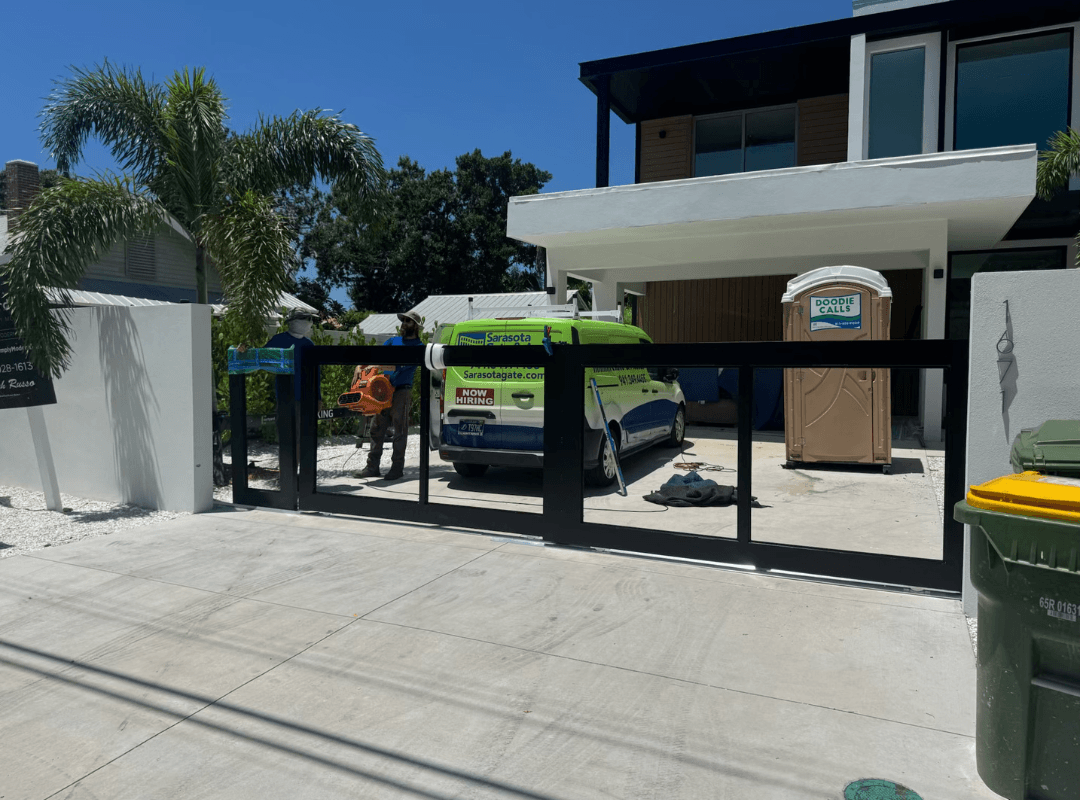
Manufacturer training is not a formality; it directly affects how a gate system is configured at installation, how warranty claims are processed, and how accurately a technician diagnoses faults when the system develops a problem. A contractor trained directly by LiftMaster, DoorKing, Viking, or Apollo configures operator parameters, safety device sensitivity, and travel limits correctly from day one. A contractor working from the installation manual frequently leaves these at default settings that are not calibrated for the specific gate and application.
Ask this question directly. If the answer is vague or deflects to general gate installation experience, treat it as a red flag.
Question 2: What Cycle Rating Are You Specifying for My Gate Operator?
Every gate operator is rated for a specific number of daily cycles, the total open and close sequences the unit is designed to handle reliably. Residential-grade operators are typically rated for 25 to 50 cycles per day. A commercial or HOA entry gate cycling 200 or more times daily needs a heavy-duty or continuous-duty rated operator. An installer who cannot tell you the cycle rating of the operator they are recommending, or who does not ask about your expected daily traffic volume before specifying, is not doing the job correctly.
This is the most common and costly specification mistake in the industry, and it shows up 12 to 18 months after installation when the undersized operator fails prematurely.
Question 3: Does Your Installation Include UL 325 Compliant Safety Devices?
UL 325 is the Underwriters Laboratories safety standard that governs all automated gate operators in the United States. It requires every automated gate to include entrapment protection, photo eyes, safety edges, loop detectors, or a combination, properly installed and configured for the gate type. A UL 325 compliant installation is not optional, and it is not an upgrade. It is the legal and safety baseline for any automated gate installation.
Ask any Fort Myers gate installer you are evaluating to confirm that UL 325 compliant safety devices are included in the proposal as a standard line item. If they are listed as an add-on or not mentioned at all, walk away.
Question 4: Do You Stock Parts for the System You Are Installing?
A gate installer who stocks parts on-site for the systems they install can complete most repairs the same day a fault occurs. An installer who orders parts after diagnosing the problem adds days, sometimes more than a week, to every service call. For a residential driveway gate, that delay is inconvenient. For a commercial property or HOA community entry, it is an operational problem that affects everyone who uses the gate.
Ask specifically what parts they carry on their service vehicles and whether they maintain a local inventory. The answer tells you a great deal about how seriously they take post-installation support.
Question 5: What Is Your Emergency Response Time After Installation?
Gate failures do not follow business hours. A gate stuck open overnight on a residential property is a security issue. A gate stuck closed at a commercial facility during operating hours is an access problem that affects customers and staff. Ask every installer you evaluate what their emergency response capability looks like after the installation is complete, whether they offer after-hours emergency service, and what the expected response time is for urgent failures.
A contractor who does not offer emergency support after installation is a contractor who will not be there when you need them most.
Question 6: What Are the Warranty Terms – and Who Handles Claims?
Warranty terms in the gate industry vary significantly. Manufacturer warranties cover the operator hardware under specific conditions, typically including installation by an authorized provider and use within the rated cycle capacity. Labor warranties, if offered, cover the installation work itself. Ask any installer you evaluate to explain both clearly and in writing before work begins.
More importantly, ask who handles warranty claims if a component fails. A manufacturer-trained, authorized provider handles claims directly through the manufacturer relationship. An unauthorized installer cannot — which means warranty claims become complicated, slow, and sometimes uncoverable even when the hardware failure is legitimate.
Question 7: Will the Same Technician Service My System Over Time?
Technician consistency matters for driveway gate systems more than most homeowners realize. A technician who services your system over time builds familiarity with its specific configuration, its service history, and the patterns that indicate an emerging problem. A rotating cast of technicians who are unfamiliar with your system each time they arrive produces longer diagnostic times, less accurate assessments, and higher service costs over the life of the installation.
Ask whether the company assigns a consistent technician to service accounts or rotates staff. The answer is a meaningful indicator of how the company operates.
Question 8: Are You Familiar with Lee County Permitting Requirements?
Gate installation in Fort Myers and Lee County typically requires a permit, and the permit application must include operator specifications, safety device configurations, and electrical connection details. A contractor unfamiliar with Lee County’s permitting requirements will produce incomplete applications that require resubmission, adding weeks to your project timeline and creating documentation gaps that surface at the time of property sale.
Ask specifically whether they have active permitting experience in Lee County and how recently they have pulled residential and commercial gate permits there. Permitting requirements vary across Southwest Florida counties, and local familiarity matters.
Red Flags to Watch for in Any Gate Installer Proposal
| Red Flag | Why It Matters |
|---|---|
| No cycle rating mentioned for the operator | Spec is likely based on price, not your property’s actual traffic volume |
| Safety devices listed as an optional add-on | UL 325 compliance is a legal requirement, not a feature to upsell |
| Vague or verbal-only warranty terms | Warranty disputes without written documentation rarely resolve in the customer’s favor |
| No mention of Lee County permitting | Unpermitted installations create legal and resale problems down the line |
| Cannot confirm manufacturer training on the recommended brand | Affects configuration accuracy, warranty eligibility, and diagnostic capability |
| No after-hours emergency service offered | You will not have support when an urgent failure occurs outside business hours |
For Fort Myers property owners ready to work with a driveway gate installer who can answer all eight questions confidently, visit our Fort Myers gate service page for local availability and response details. For details on our preventive maintenance program, including same-day priority service and dedicated technician assignment, visit our maintenance plan page. For a full overview of all gate and access control services we offer throughout Southwest Florida, visit our services overview.
Frequently Asked Questions
What should I look for when hiring driveway gate installers near me in Fort Myers?
The most important factors are manufacturer training on the system being installed, UL 325 safety device compliance included as standard, cycle rating specification matched to your actual daily traffic volume, Lee County permitting experience, and documented warranty terms. A contractor who addresses all of these proactively in their proposal is operating at a professional standard. One who cannot answer these questions clearly is a significant risk regardless of how competitive their price appears.
Does driveway gate installation in Fort Myers require a permit?
In most cases, yes. Automated driveway gate installations in Fort Myers and Lee County require a permit, and the installation must meet UL 325 safety standards. Installations completed without the required permit create documentation gaps that complicate property sales and may require costly remediation. Always confirm that any gate installer you hire will obtain and close the required permit as part of the project scope — not as an afterthought after work is complete.
How do I know if a gate operator is the right size for my Fort Myers property?
The right operator for your property is determined by your gate’s weight, span, and expected daily cycle volume, not by what is available at a given price point. A qualified installer will assess all three before specifying an operator. If a contractor recommends an operator without asking about your expected daily traffic volume, they are specifying based on what they have available or what fits a budget, not what your gate actually needs. Ask specifically about the cycle rating and how it was matched to your property’s requirements.
What is UL 325 and why does it matter for my driveway gate in Fort Myers?
UL 325 is the Underwriters Laboratories safety standard that requires all automated gate operators in the United States to include entrapment protection devices, photo eyes, safety edges, or loop detectors depending on the gate configuration. Compliance is a legal requirement for any automated gate installation, not an optional upgrade. A gate installed without compliant safety devices creates direct liability exposure for the property owner if an entrapment incident occurs. Confirm that UL 325 compliance is explicitly included in any installation proposal you receive.
24/7 Emergency Gate Service: 229.251.3066 | Main Office: (941) 349-4455 | Email: info@sarasotagate.com