
HOA gate access control companies in Sarasota see the same five mistakes repeated across community after community, and in most cases, the boards making them are not uninformed. They are working with incomplete information, relying on the recommendations of whoever installed the system years ago, or managing a gate infrastructure that was never properly specified for the community’s actual needs. This post covers each mistake directly, explains why it creates problems, and gives boards a practical correction they can act on before the next failure or liability event occurs.
5 Access Control Mistakes Sarasota HOA Boards Make – and the Corrections That Fix Them
Mistake 1: Choosing a Residential-Grade System for a Community Entry
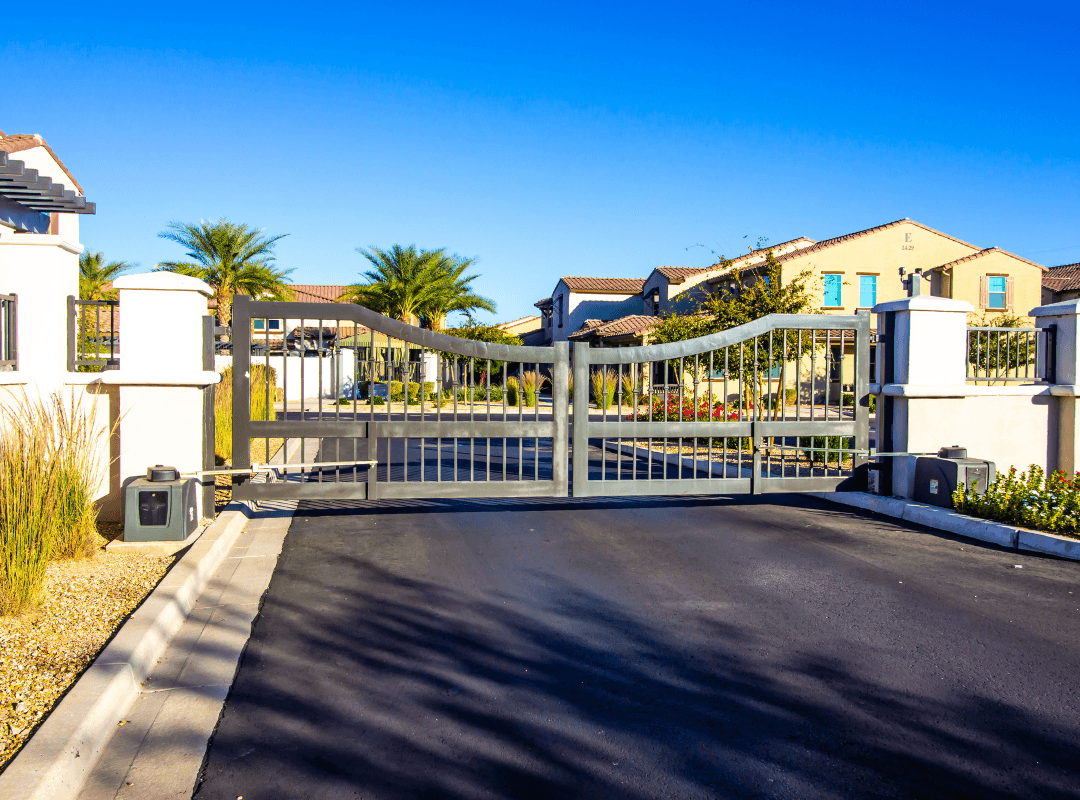
The most expensive mistake an HOA board makes at installation is specifying a residential-grade gate operator for a community entry that cycles at commercial volumes. Residential operators are rated for 25 to 50 cycles per day. A primary HOA community entry in Sarasota cycling 150 to 300 times daily will exceed that rating within hours of normal operation. The result is premature motor wear, gearbox degradation, and a system that requires full replacement within 18 to 24 months of installation, at a cost significantly higher than the difference between residential and commercial-grade equipment would have been at the start.
Under UL 325, commercial and HOA gate applications require operators rated for the actual duty cycle of the installation. A residential operator running in a commercial-cycle application is not just undersized; it creates compliance gaps as the safety devices degrade faster than the manufacturer’s maintenance schedule anticipates. The correction is straightforward: before any gate installation or replacement, require the contractor to provide the operator’s rated cycle capacity in writing and confirm it exceeds your community’s actual daily traffic volume. If a contractor cannot or will not provide that specification, that is a meaningful signal about the quality of what they are proposing.
| Do Not Do This | Do This Instead |
|---|---|
| Select an operator based on purchase price without confirming cycle rating | Require the contractor to provide the cycle rating in writing and confirm it exceeds your community’s daily volume |
Mistake 2: Skipping the Diagnostic Audit at Installation
A gate system that is installed without a documented diagnostic baseline has no reference point for future service calls. When a fault develops six months or two years after installation, the technician arriving to service it starts from zero — no equipment catalog, no record of prior recommendations, no documented baseline to compare against. That diagnostic gap adds time and cost to every service call and makes it significantly harder to identify whether a problem is a new development or something that was present but unaddressed from the beginning.
Every HOA gate installation and every new service relationship should begin with a comprehensive Diagnostic Inventory Audit, a full inspection that catalogs every component of the system, identifies high-wear parts before they fail, and establishes a documented service baseline. For communities already operating without one, scheduling an audit now is the correction. It takes one service visit to establish, and every future visit builds on it. The cost of the audit is a fraction of what a single emergency repair call costs when a technician spends the first hour figuring out what the system contains and how it is configured.
| Do Not Do This | Do This Instead |
|---|---|
| Begin service calls without a documented system baseline | Schedule a Diagnostic Inventory Audit to catalog equipment and establish a service record before the next failure occurs |
Mistake 3: Deferring Maintenance Until Something Breaks
Reactive maintenance, waiting until a component fails before scheduling service, is the most predictable way to pay more for gate system ownership over time. In Sarasota’s coastal environment, salt air corrosion, heat-accelerated lubrication breakdown, and storm season power events create wear conditions that develop gradually and fail suddenly. The communities that manage total maintenance cost most effectively are those on structured preventive maintenance schedules, not those that call for service only when something stops working.
Florida Statute 720 gives HOA boards authority over common area infrastructure, including gate systems. That authority comes with an implicit responsibility to maintain that infrastructure in a functional and safe condition. A gate system that fails because maintenance was deferred is not just a cost problem; it is a liability exposure and, in some failure modes, a UL 325 compliance issue. The correction is enrolling in a structured maintenance program before the next failure rather than after it. For HOA boards in Sarasota evaluating that decision, our HOA preventive maintenance plan covers what a structured program actually includes and how it differs from a reactive service relationship.
| Do Not Do This | Do This Instead |
|---|---|
| Call for service only after a failure occurs | Enroll in a structured preventive maintenance program calibrated to Florida’s climate and your community’s cycle volume |
Mistake 4: Using Shared PIN Credentials for All Residents
Shared PIN codes are one of the most common access control system troubleshooting roots we encounter in Sarasota HOA communities, not because the technology is failing, but because the access management practice is broken. A shared PIN that 200 residents know cannot be revoked from a single former resident, a former contractor, or an individual who has shared it further without the board’s knowledge. It provides the appearance of access control without the substance of it.
Modern access control systems support individual credentials, key fobs, mobile app access, or individual PIN assignments that can be issued, tracked, and revoked per person. When a resident moves out, their credential is deactivated in minutes, without affecting anyone else’s access. The activity log shows who entered and when, which the board can reference if a security concern arises. The correction is not a technology upgrade in most cases; it is a configuration change and a credential management process that many installed systems already support but were never configured to use. An access control maintenance and support review of your current system will identify whether individual credential management is available within your existing platform. Visit our HOA gate services page for details on what a credential audit involves.
| Do Not Do This | Do This Instead |
|---|---|
| Issue a single shared PIN to all residents with no individual tracking | Configure individual credentials per resident with an active process for deactivating access when residents move out |
Mistake 5: Not Planning for Storm Season Power Outages
Battery backup is the most frequently overlooked component of Sarasota HOA gate systems, and the one that causes the most visible failures during hurricane season. A gate system with a degraded or absent battery backup will default to either a fail-safe open or fail-secure closed position when grid power fails. A community gate stuck closed during a storm evacuation is a safety issue. A gate stuck open for 36 hours after a storm passes removes the perimeter security the system exists to provide.
Florida’s storm season is predictable. Battery backup capacity should be tested annually at minimum, not visually inspected, but load-tested under simulated power loss to confirm the unit can sustain gate operation for the required duration. Batteries degrade over time and may show full resting voltage while failing under load. The correction is scheduling a pre-storm battery backup load test before June 1 of each year, and replacing any unit that does not hold adequate capacity under load conditions. For a full overview of what this inspection covers and how it fits into a broader storm preparedness approach, our gate and access control services overview and Sarasota service page cover local availability.
| Do Not Do This | Do This Instead |
|---|---|
| Assume the battery backup is functional because the system operates normally on grid power | Schedule an annual load test under simulated power loss before hurricane season and replace any unit that fails to hold capacity |
Frequently Asked Questions
What are the most common HOA gate access control mistakes in Sarasota?
The five most common mistakes Sarasota HOA boards make are specifying a residential-grade operator for a community-cycle application, installing without a documented diagnostic baseline, deferring maintenance until a failure occurs, using shared PIN credentials instead of individual access management, and failing to load-test battery backup before storm season. Each of these is correctable without a full system replacement in most cases; the starting point is a qualified access control system assessment to identify which issues apply to your specific installation.
Can an HOA board in Florida be held liable for gate access control failures?
Under Florida Statute 720, HOA boards have authority over common area infrastructure, including gate systems. That authority carries an implied responsibility to maintain gate systems in a functional and safe condition. A gate with malfunctioning UL 325 safety devices, a gate that fails closed during an emergency evacuation due to an unaddressed battery backup failure, or a gate with known mechanical issues that were deferred creates documented liability exposure for the association. Boards that maintain service records and operate on structured maintenance schedules are in a significantly stronger position when compliance or liability questions arise than those with no documentation of maintenance activity.
How does access control maintenance and support differ from reactive gate repair?
Reactive gate repair addresses the system after a failure has occurred. Access control maintenance and support is a structured, proactive approach that inspects and services the system on a schedule calibrated to its cycle volume and operating environment, catching wear patterns, corrosion, and safety device degradation before they cause failures. In Sarasota’s coastal environment, the gap between reactive and preventive total cost of ownership is significant. Communities on structured maintenance programs consistently see lower emergency repair frequency, longer equipment lifespans, and fewer board complaints about gate reliability than those on reactive service models.
Main Office: (941) 349-4455 | 24/7 Emergency: 229.251.3066 | Email: info@sarasotagate.com